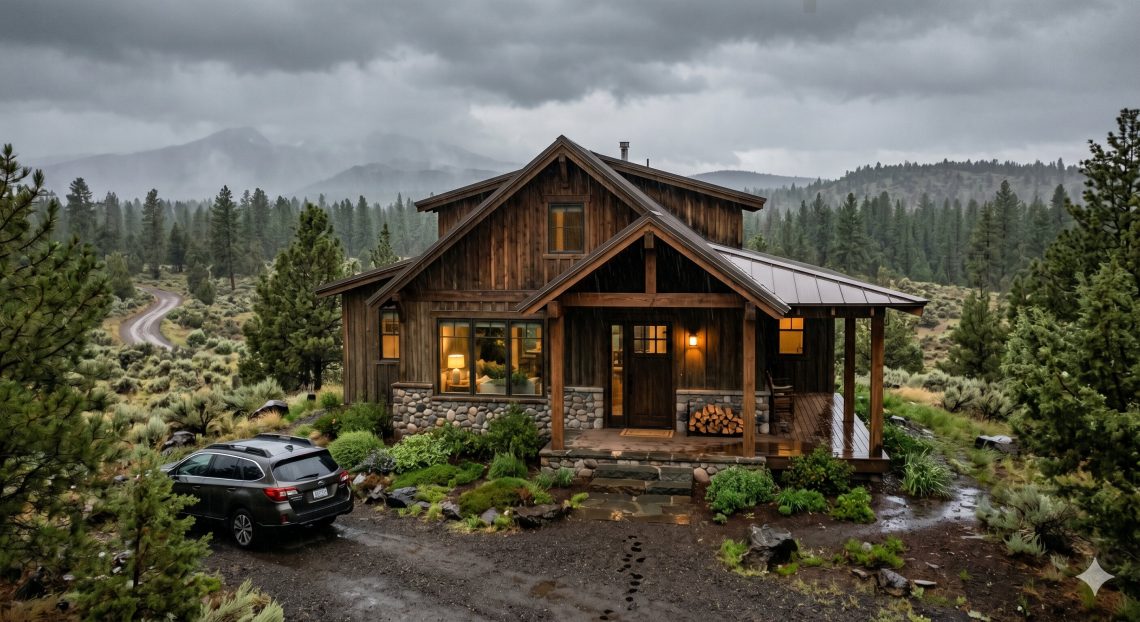
How Oregon’s Climate Impacts Homeowners Insurance
In Central Oregon, the high desert landscape is as famous for its rugged beauty as it is for its climatic volatility. For homeowners in Bend, Redmond, and the surrounding Cascades, the environment is no longer just a backdrop for recreation—it is the primary architect of their insurance premiums. As of 2026, the intersection of shifting climate patterns and a tightening insurance market has turned “wildfire risk” from a regional concern into a defining financial factor for property owners.
The Wildfire Reality and Premium Spikes
Central Oregon’s climate is characterized by low humidity, frequent lightning, and persistent drought cycles—a trifecta for wildfire activity. While the region has always been fire-prone, the increasing frequency of “mega-fires” has forced a reckoning in the actuarial world.
Insurance companies have pivoted from broad regional assessments to hyper-local, data-driven modeling. Many carriers now use proprietary satellite imagery and AI to assess a home’s proximity to “fuel loads” (dense brush or timber). For residents in the Wildland-Urban Interface (WUI), this has translated into annual premium increases that often outpace the national average. In some high-risk ZIP codes, homeowners have seen their rates climb by 25% to 40% over the last few years, as insurers seek to offset the staggering cost of total-loss claims that often follow wildfires.

Availability and the “Non-Renewal” Trend
Beyond the cost, the most significant impact of climate change is on availability. In 2025 and 2026, several national carriers began “de-risking” their portfolios, often by non-renewing policies for homes in heavily forested or remote areas. When a private carrier pulls out, homeowners are often forced into the Oregon FAIR Plan—the state’s insurer of last resort.
While the FAIR Plan recently increased its coverage limits (now up to $600,000 for residential structures), it remains a “bare-bones” policy. It typically only covers fire and smoke, requiring homeowners to purchase a separate “Difference in Conditions” (DIC) policy to cover theft, liability, and water damage. This tiered approach is not only cumbersome but significantly more expensive than a standard HO-3 policy.
The High Desert’s “Other” Climate Risks
While fire dominates the headlines, Central Oregon’s climate impacts insurance in subtler ways:
- Frozen Pipes and Ice Dams: The region’s dramatic diurnal temperature swings—where it can drop from 60°F to 10°F in a single night—lead to frequent pipe bursts. In older Bend neighborhoods, these “secondary perils” are a leading cause of non-catastrophic claims.
- Heavy Snow Loads: High-altitude areas like Sunriver or Sisters face heavy winter snowpack. Insurers increasingly scrutinize roof age and material, as a “roof collapse” claim can be as costly as a minor fire.

Mitigation as a Financial Strategy
The 2026 landscape has birthed a new era of defensible space. In response to failed legislative attempts to mandate discounts (like the 2026 Senate Bill 1540), the market has begun to reward proactive homeowners voluntarily.
Homeowners who invest in Class A fire-rated roofing, ember-resistant vents, and the removal of “ladder fuels” (low-hanging branches) within 30 to 100 feet of their structure are finding it easier to secure coverage. Many insurers now require a “Wildfire Home Assessment” before binding a new policy. In Central Oregon, “curb appeal” is being replaced by “climate resilience” as the most important factor in a home’s insurability.
For Central Oregonians, the climate is no longer a static variable. As the high desert continues to dry and the forest creeps closer to the suburbs, the cost of living in paradise is increasingly tied to how well a home can withstand the elements. For those looking to buy or renew, the message is clear: understanding your home’s “fire score” is just as vital as checking the square footage.
Get a homeowners insurance quote today by calling us at (541) 318-8835. or click here to connect with us online.


You May Also Like

Does Homeowners Insurance Cover Vacation Homes?
Unveiling the Facts: Does Homeowners Insurance Extend to Rental Properties?